Overview
Kata.ai is an Indonesian AI company that empowers brands and enterprises to build their intelligent chatbot. In 2017, the Kata.ai engineering team built a Kata Platform, a chatbot builder that enables engineers to design, develop, test, and deploy chatbot into any messaging applications. In 2019, I took part in redesigning the chatbot builder experience for the Kata Platform.
My role & approach
I was responsible for the primary research phase of the process. I conducted user interviews, usability testing, user research, and synthesized insights. I also contributed to creating a wireframe and interaction design that ended up in the hi-fidelity prototype.
Preliminary
Kata.ai already had a well-established B2B service model. However, they encountered a phase where they realized they needed a service that can accommodate users with various backgrounds. They are on a mission to build Kata Platform:
- For Conversation designers, it has a flexible way of designing conversations, from prototype to final chatbot.
- For Conversational AI engineers, it has an easy integration for various messaging services to help semantic context handling processes at any conversation.
- For Marketing strategists, it provides a comprehensive platform to base Marketing Automation strategy in the long-term.
- For Business owners, it provides a customer relationship management system to generate leads, personalize customer journeys, and capture data in a short time.
So, the purpose of the new Kata Platform is to enable better collaboration between Conversation designer, Conversational AI engineers, and all of the stakeholders.
The Challenges
Kata Platform was designed and developed in 2017 and struggled to scale the services alongside the company’s growth. The fundamental usability of the building chatbot was challenged. In theory, the process of building a chatbot is simple: build a chatbot, setup the AI, deploy the chatbot, then improve the AI for the chatbot. However, the business goals changed over time, diverse new features and technology tried make their way into the platform; as a result Kata Platform didn’t serve its usability as a chatbot builder.
The Goals
Our initial approach was to build a strong foundation for the end-to-end chatbot building process on the new Kata Platform. Our high-level goals were to:
- Create a sustainable platform for building a chatbot.
- Help users focus on building the chatbots and empower the chatbot.
- Give users the freedom to control the chatbot as their customer support.
Discovery phase
Contextual inquiry & analysis
To get a more holistic view on the nature of building a chatbot and how clients use a chatbot for their brands or enterprises, we conducted observations and interviews with wider-lense to gain generic and specific insight.
For observations, we try to identify the communication between the engineering team, project managers, and copywriters on building chatbots together; we also discovered how clients use the chatbot for their brands or enterprises.
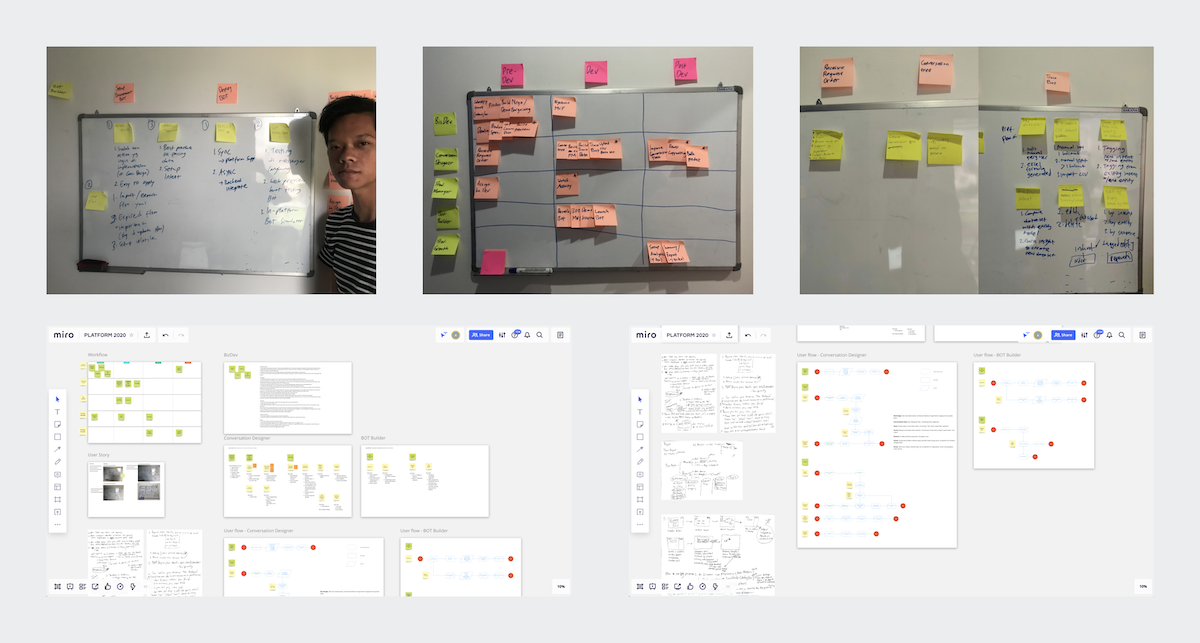
Discovering how team member use old Kata Platform
Observation #1: How Project Manager handles client’s project
Project managers: Get project briefs from clients, Monitor chatbot building progress, Test chatbot on staging, Launch the chatbot and deliver the chatbot to clients.
Observation #2: How Conversation designer designs conversation flow for chatbot
Conversation designers: Build the base context by designing the conversation flows, Write chatbot response (Copywrite), Set the AI rules for a chatbot, Test the chatbot.
Observation #3: How Conversational AI engineer build the chatbot and make it live
Conversational AI engineers: Implement flows into the system, Setup the AI for the chatbot, Test chatbot, Deploy the chatbot into messaging applications.
Observation #4: How clients use the chatbot when it’s liveKey findings
— After the chatbot goes live, clients: Capture data and personalize customer journeys through conversations. Empower chatbot as a marketing-automation tool. Handle repetitive questions from customers such as FAQ. Help human agents to handle conversations from customers 24/7.
We interviewed the engineers who are familiar with building chatbots and the copywriters who are familiar with conversation design. We also talked to several non-engineering teams, including the project manager, copywriter, sales, and marketing team, to gain in-depth insight.
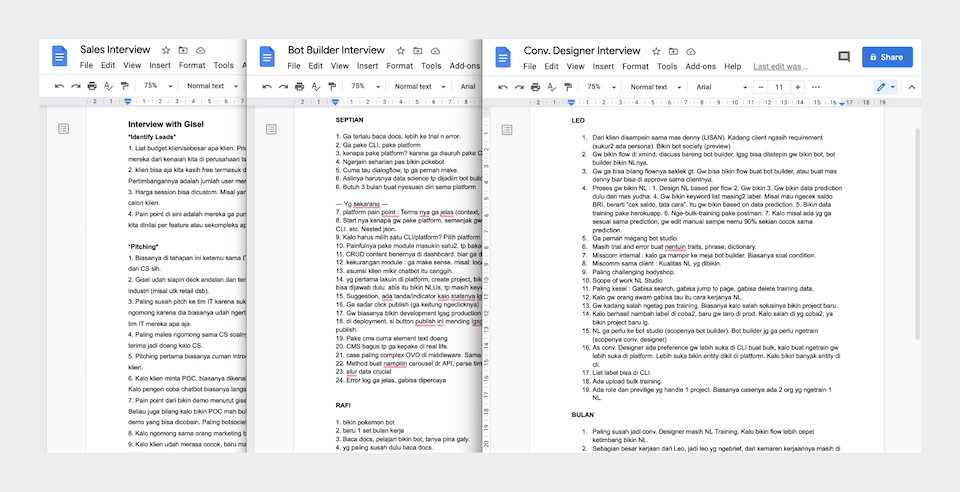
In-depth interview with team member
Competitive analysis
Some businesses with a different go-to-market strategy had to try fitting their services into the market. Most chatbot builders have a base functionality: design conversation and set up the AI rules. We try to map out what services are commonly implemented on most chatbot builders in the AI industry.
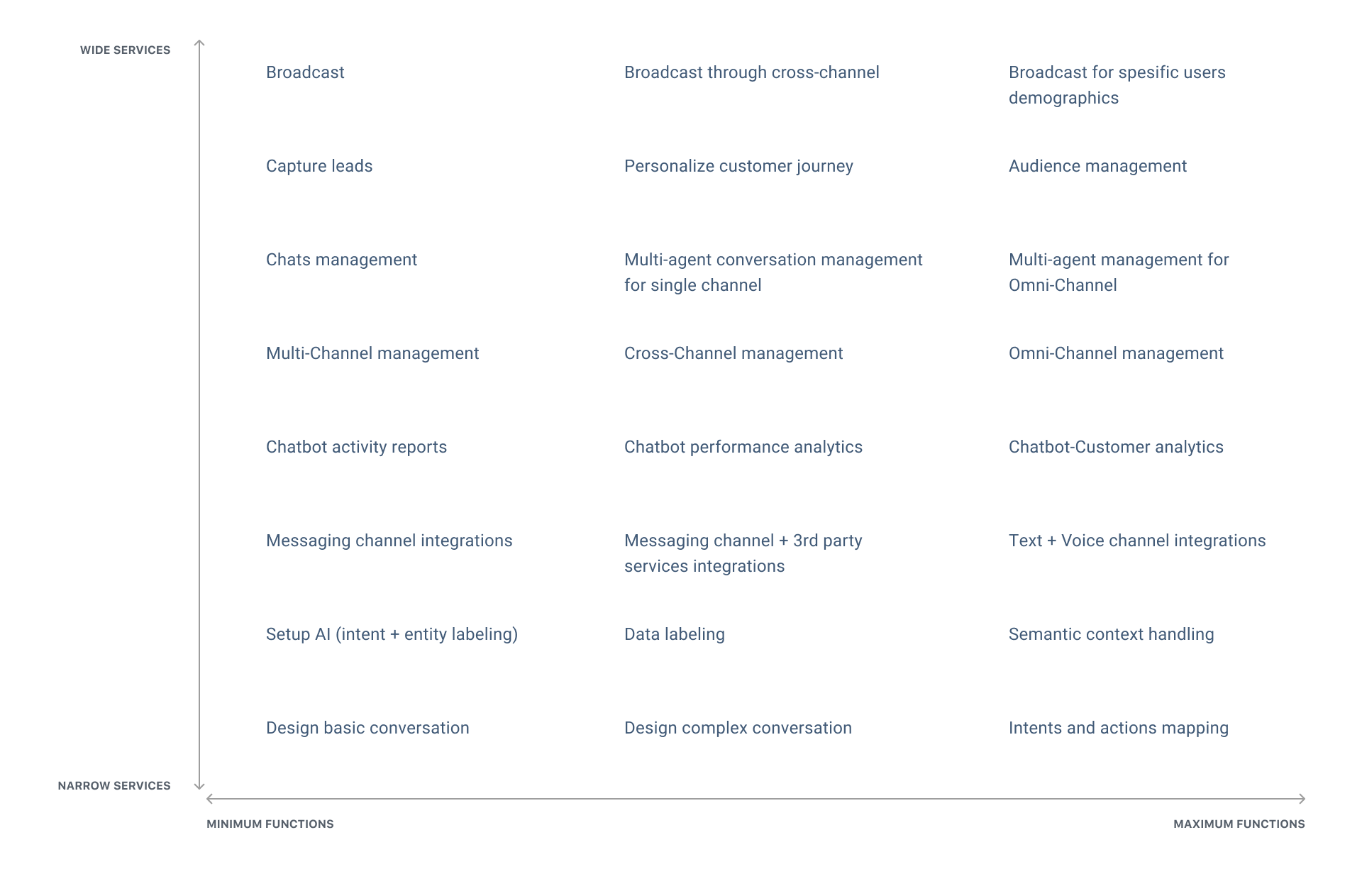
Service mapping
By combining our company’s substantial value, we considered validating which features or services should be applied to our potential users and what Kata Platform capitalization on the market should be. We define this by identifying other chatbot builder key focuses and then plot them on an opportunity matrix.
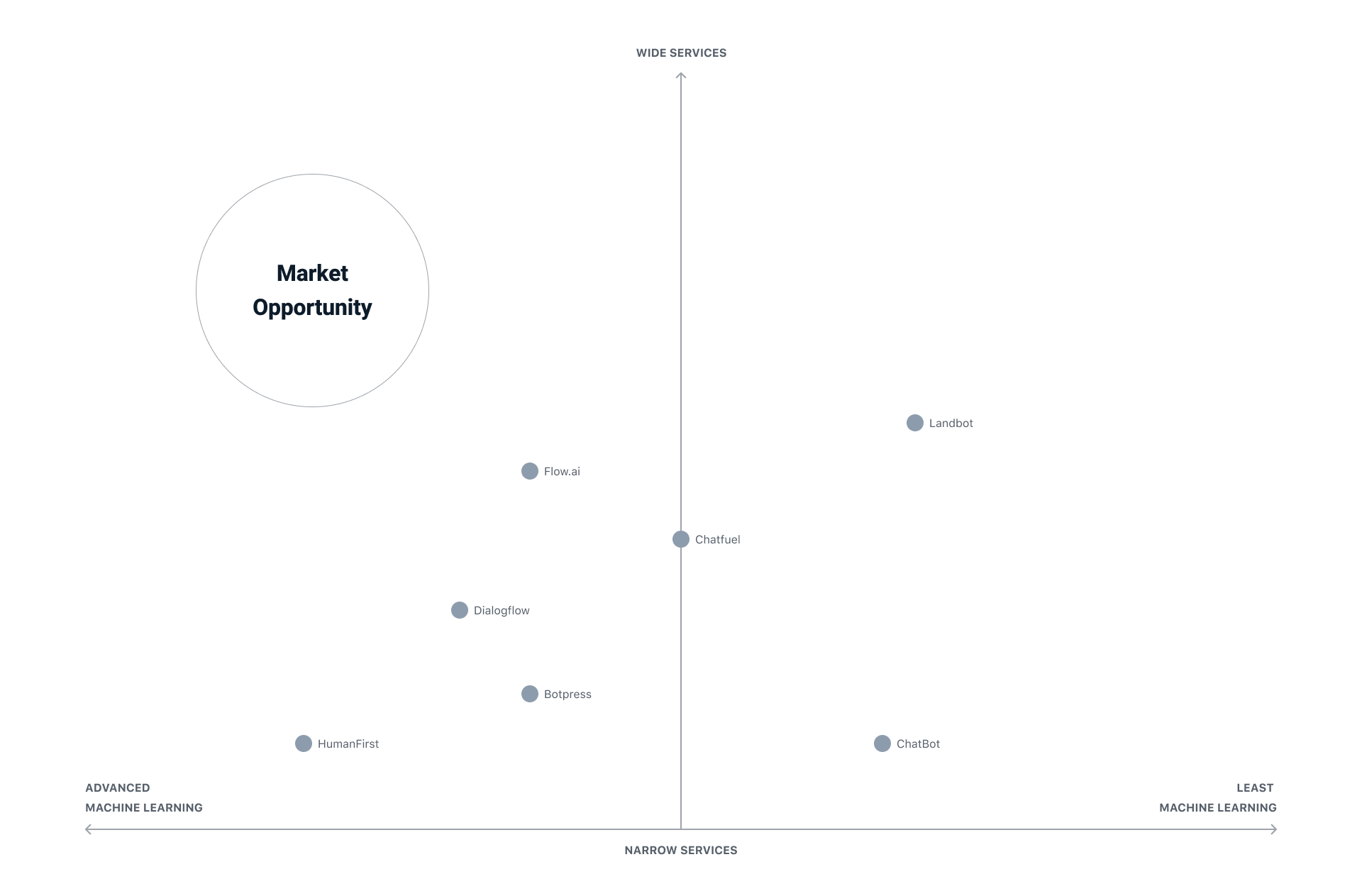
Opportunity Matrix
The competitive analysis outlined where the primary competitors are and what are their weaknesses. And through this research, we established three direct competitors: Landbot, Chatfuel, Flow.ai.
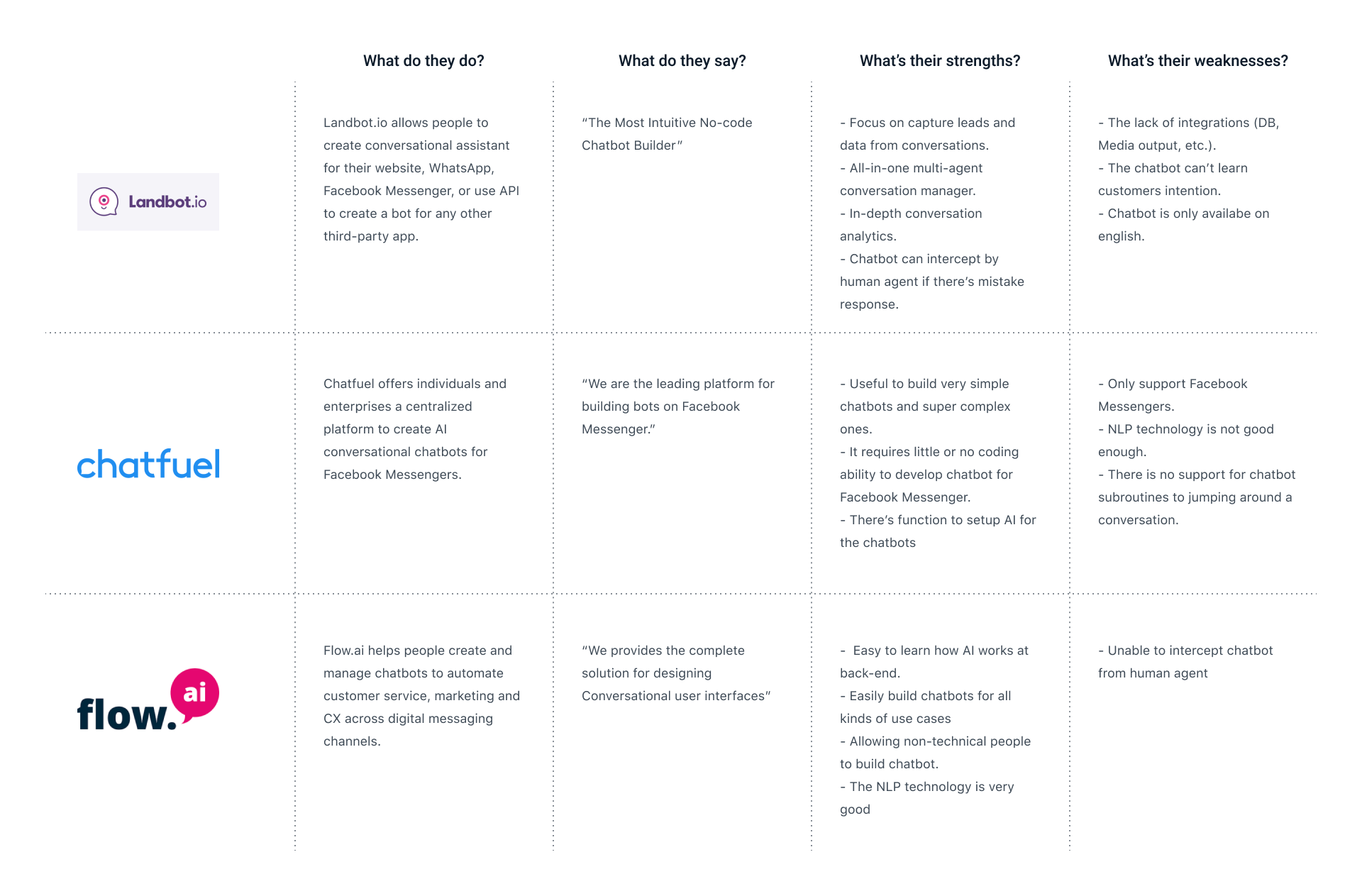
Competitive analysis
Analyzing
Reframing the problems
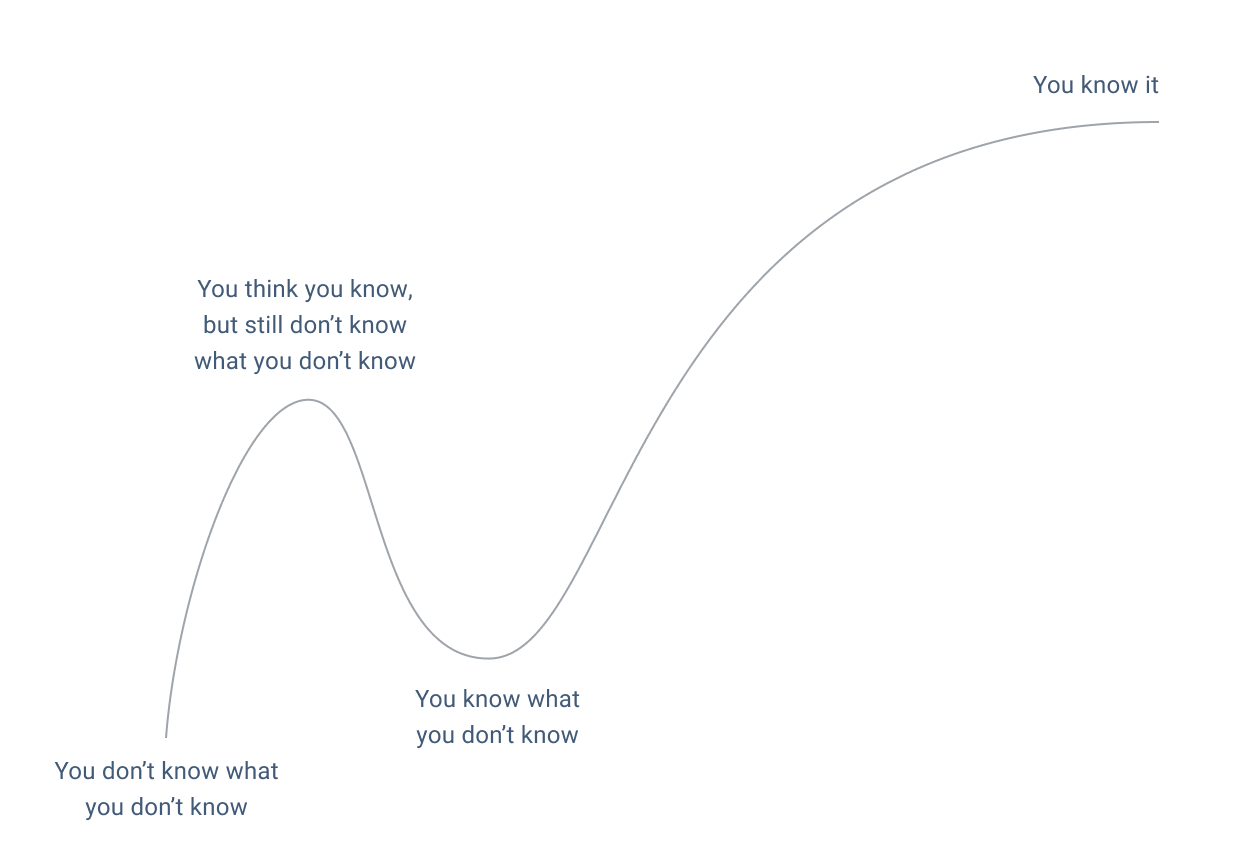
We discovered that the existing Kata Platform has a steep learning curve; it's hard to use for brands or enterprises to build their intelligent chatbot. For our users, even those who had an engineering background, around 6 from 9 people who had experienced building chatbot using Kata Platform telling that it takes approximately 3 months to know how to build chatbot using Kata Platform. And after delivering the chatbots, both our brands and enterprises struggled to find how their chatbot impacted their business.
Older Kata Platform's Learning curve
We recognized that we are about to tackle some problems. So, we partnered with one of the engineers, conversation designers, and product managers to design the Kata Platform solutions. We used this framework to investigate how good or bad the chatbot building process on the existing Kata Platform.
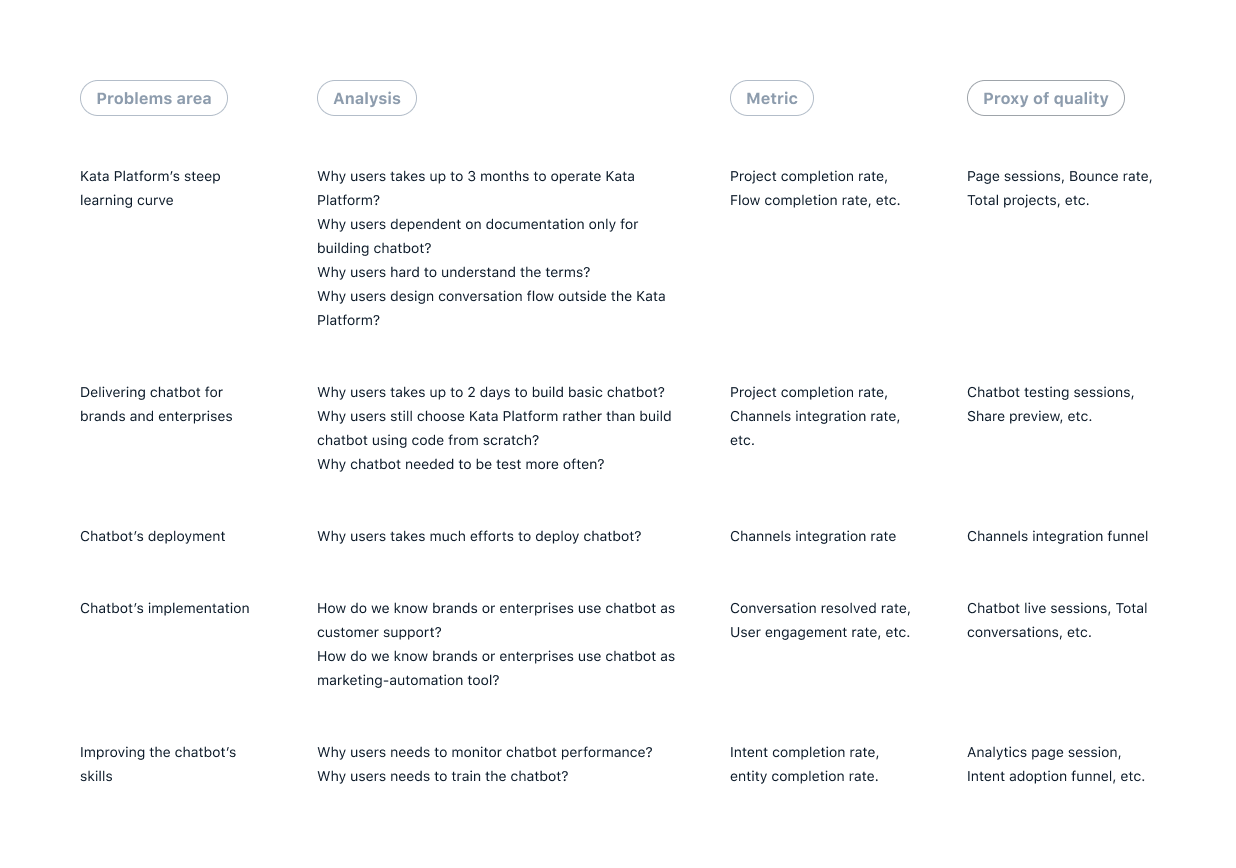
Digging the data from this analysis, we got some significant insights that are problematic in building a chatbot. They consist of understanding the technical terms, too many back-and-forth steps, lack of chatbot building purposes, and inefficient integrations. On top of that, the problems also arose on the client's side. After the chatbot is delivered to them, they can't trace the chatbot's activities, analyze their real-time customer, nor detect the chatbot mistakes.
While building the chatbot, users’ time and energy were having a material impact on Kata.ai as a business. The activities between setup the AI and testing the chatbot is still the most frustrating step in building the chatbot. Naturally, brands and enterprises need a direct impact on what are they invested in. Therefore, they assume chatbots are able to do sophisticated tasks, generate leads, and improve immediate sales without a training process. They think with a minimum setup of AI, chatbot could handle various conversations from their customers. They feel exhausted to improve the chatbot by doing the setup and testing the chatbot again and again.
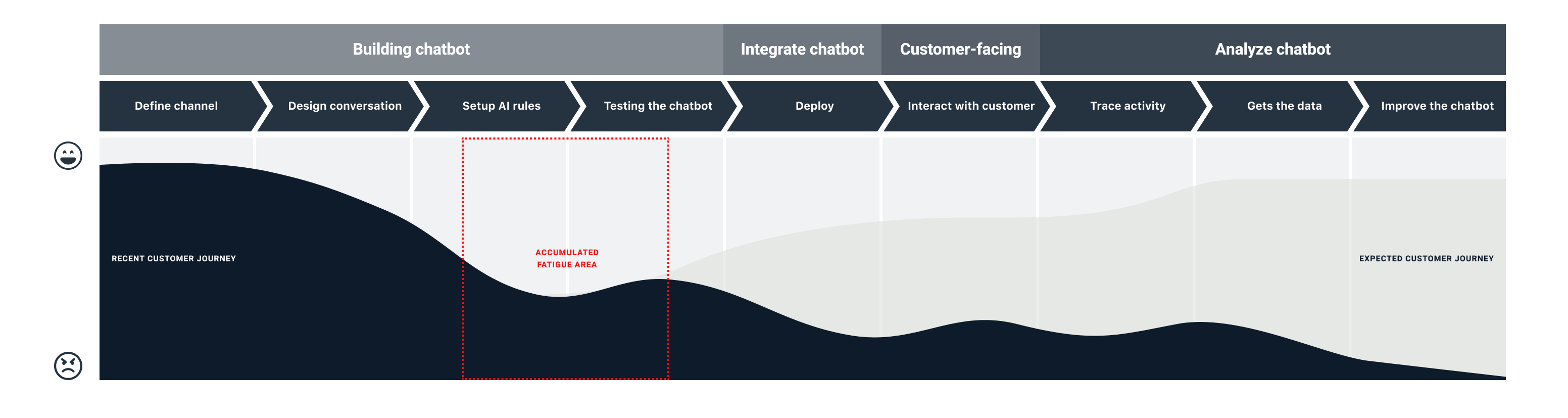
Older Kata Platform's Learning curve
Ideating solutions
These findings made us aware that the Kata Platform users are already busy with their daily activities for their professional jobs, so what they care about is only the target they’re trying to achieve. The clients always seek how the chatbot either could help their business or improves their team’s performance.
Hence, we created How Might We (HMW) questions to help us brainstorm the solutions. Some of the key questions include:
- HMW enables users to build a chatbot in a very basic way?
- HMW make users aware of training the chatbot?
- HMW enables users to preview the chatbot’s prototype?
- HMW offers users a chatbot integration seamlessly?
- HMW every functions collaborate to provide the Chatbot?
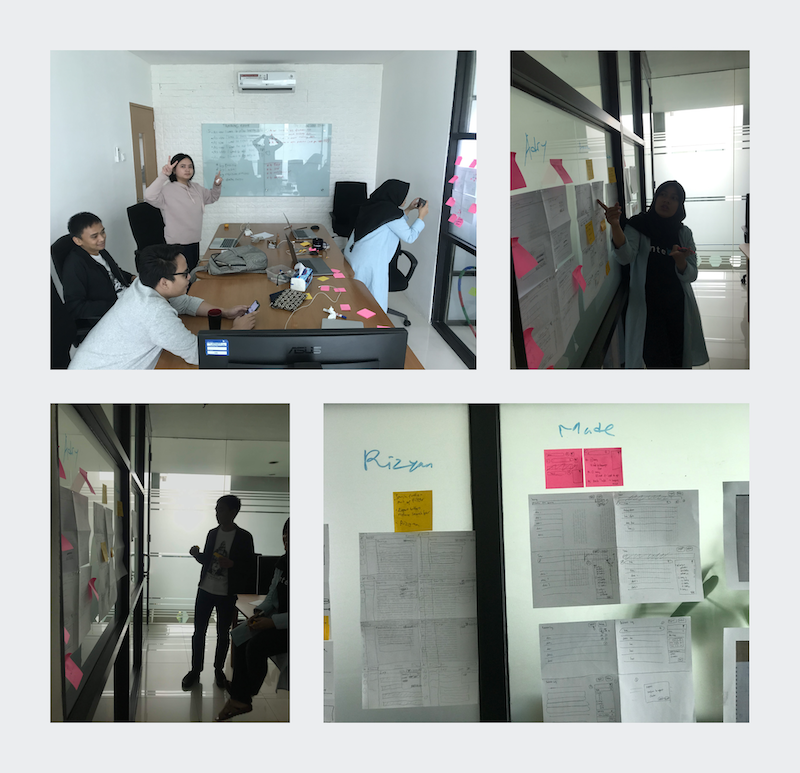
Brainstorm session with Product managers and Engineer
Develop the concept
Hypothesis statement
Instead of starting with an engineer-centric design, we needed to start with a minimum bar of quality to enable people to build faultless chatbots. There are only one thing users needed to know to build the chatbot—How to build the chatbot and improve it.
Imagine having live agents who communicate with their customers, and you can train the agents later for better communication for your customer. We assume by giving this context to our users, it could help them build the chatbot. Users may have different knowledge or professional backgrounds, but we ensure they had the same output—a faultless chatbot as a live agent.
Designing new chatbot building experience
Brands and enterprises set up a chatbot to ease the pain while handling repetitive questions from customers. The sophisticated level encompasses the context handling from customers by the chatbot itself. The primary objective of building the chatbot is actually to handle the repetitive questions first and then handle various contexts later. The purpose of chatbots itself is to support business teams in their relations with customers.
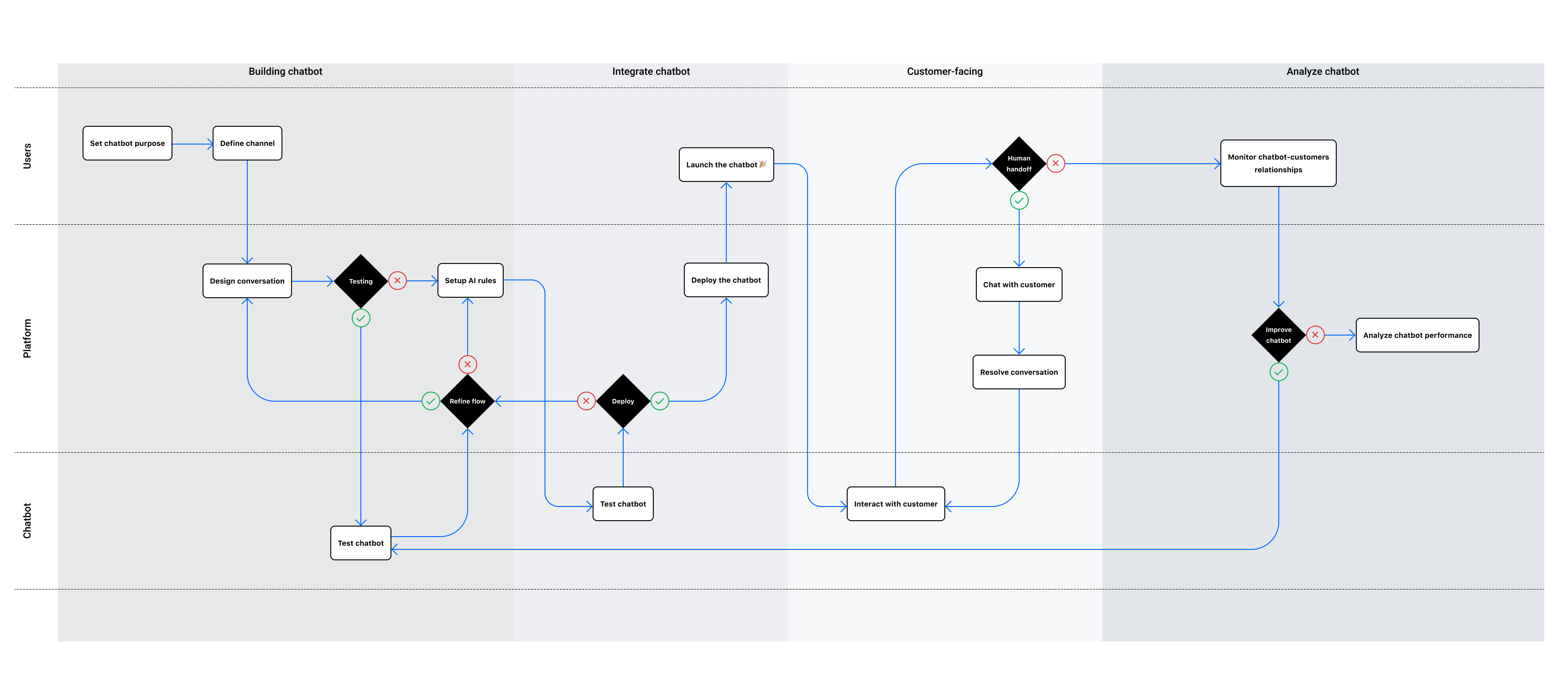
New Kata Platform's user flow
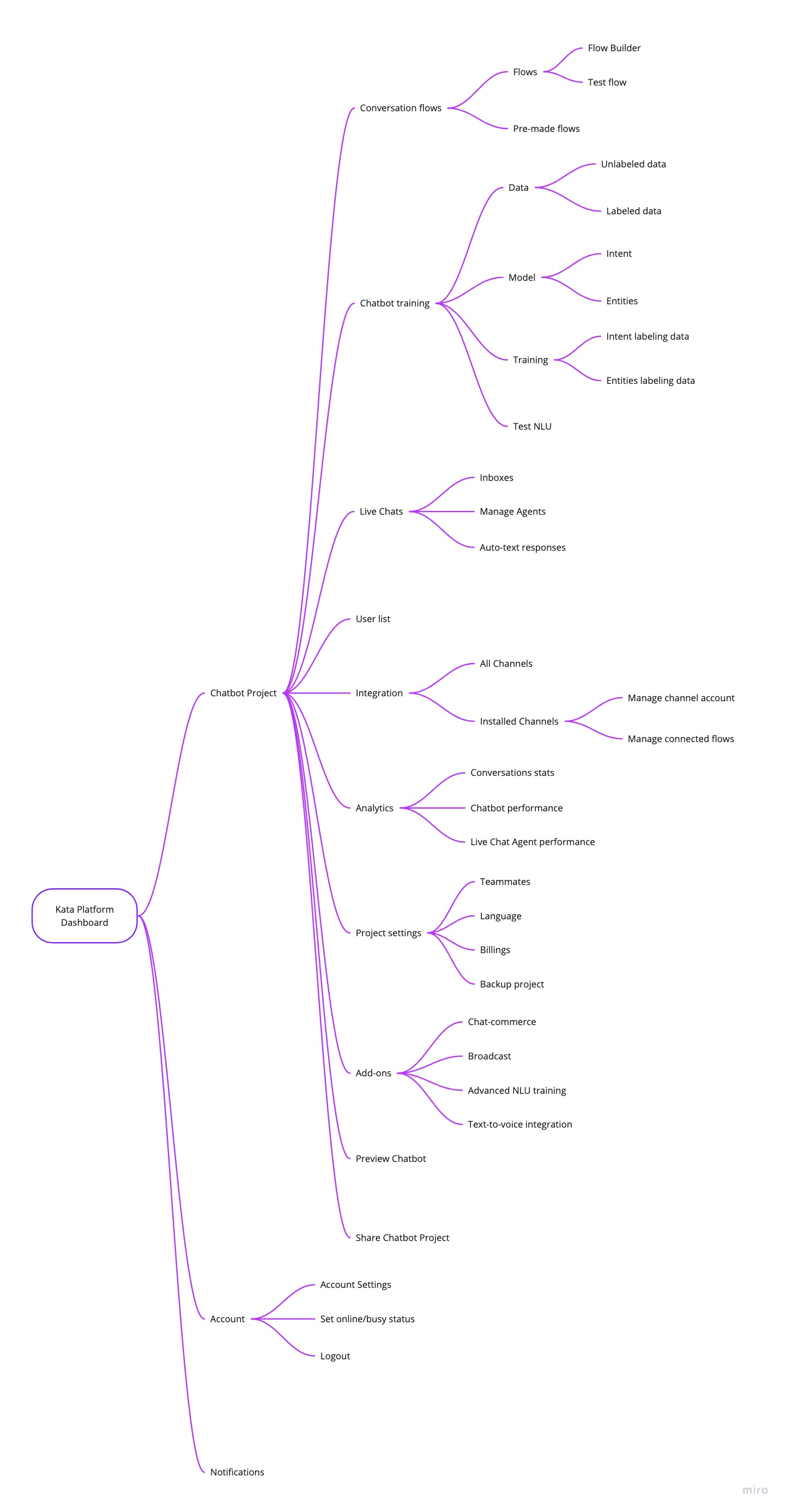
From chatbot building process until analyzing the chatbot, the tasks and activities must be organized by all accross functions inside organization or team. Given the speculation of the idea, we decided to experiment with a base function version for the new Kata Platform.
New Kata Platform's Information Architecture
Each business has a different language to communicate with its customers. There are three ways to building a chatbot with the new Kata Platform:
- Build chatbot from scratch
- Build chatbot from scratch and use a few pre-made flows for its chatbot
- Choose pre-designed chatbot and customize it
User doesn’t need to reinvent a flow if Kata.ai already offer a ready-to-use chatbot template as a basic chatbot at first. User can always use the preview chatbot feature to try out the end-user experience. When user loads chosen chatbot project template, they’ll see the conversational flow all set up for them. All they have to do is customize the content inside the flow that’s already there. Edit the text or images in the action blocks so those could fit with their brand or business needs.
Pre-made flows or pre-designed chatbots could help users learn how the basic chatbot works, and for further implementation or to scale up the chatbot functionality, they have the capability to customize it by themself in the future.
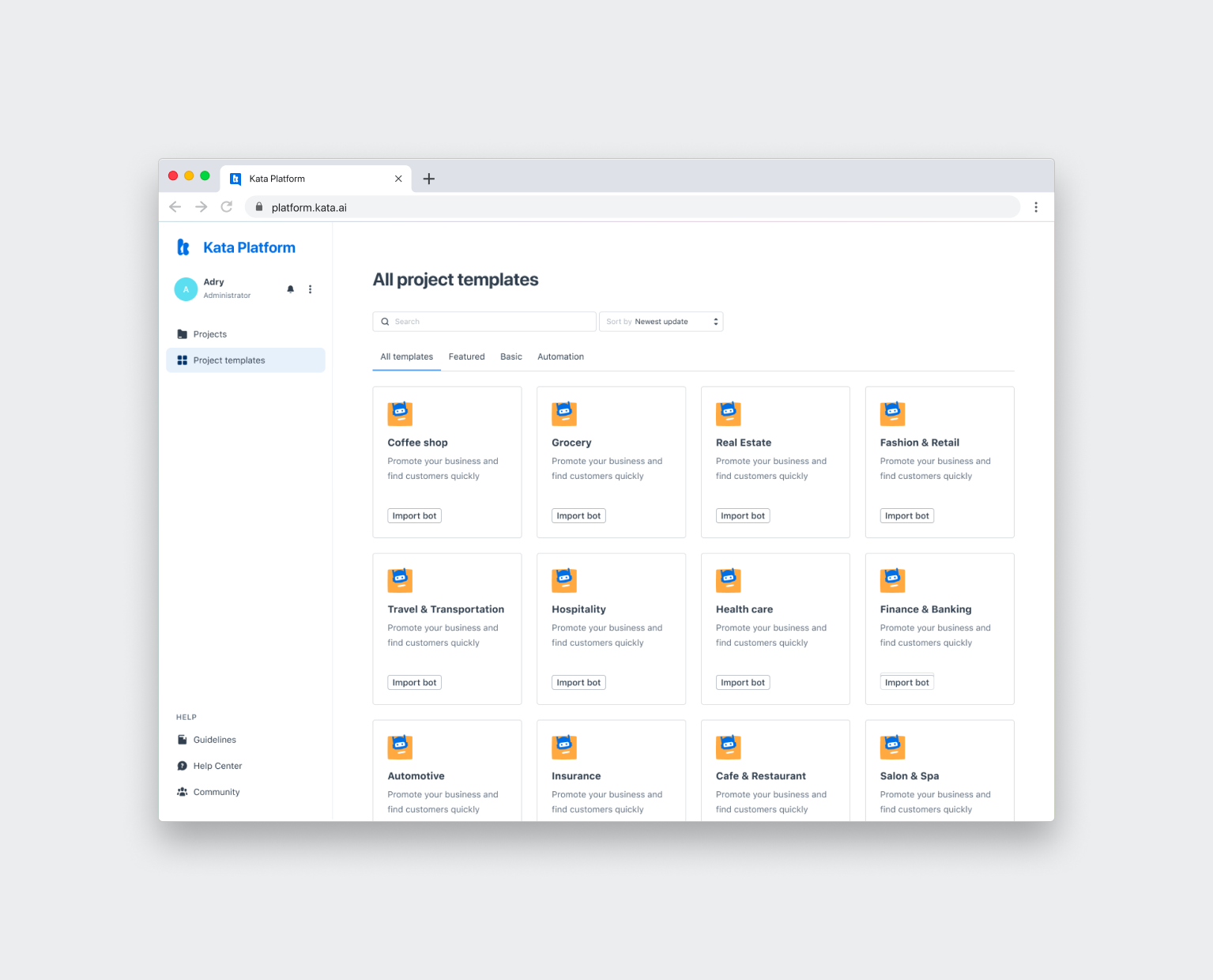
New Kata Platform's Dashboard
Conversation flows builder
Rule-based or decision-tree chatbots follow a pre-defined conversational flow defined by rules in ‘If-this, then-that’ fashion. Rule-based chatbots are considered more effective for handling end-user questions and routine queries such as asking ATM location, checking phone credit, etc.
The conversation flow builder UI is very minimal; it could handle basic rule-based chatbot development. You can edit the flows, contents, and conditional logic for the chatbot. Makes user know the basic rules of FAQ at a glance and knowing how to scale the size of scope of Questions and expected answers from customers.
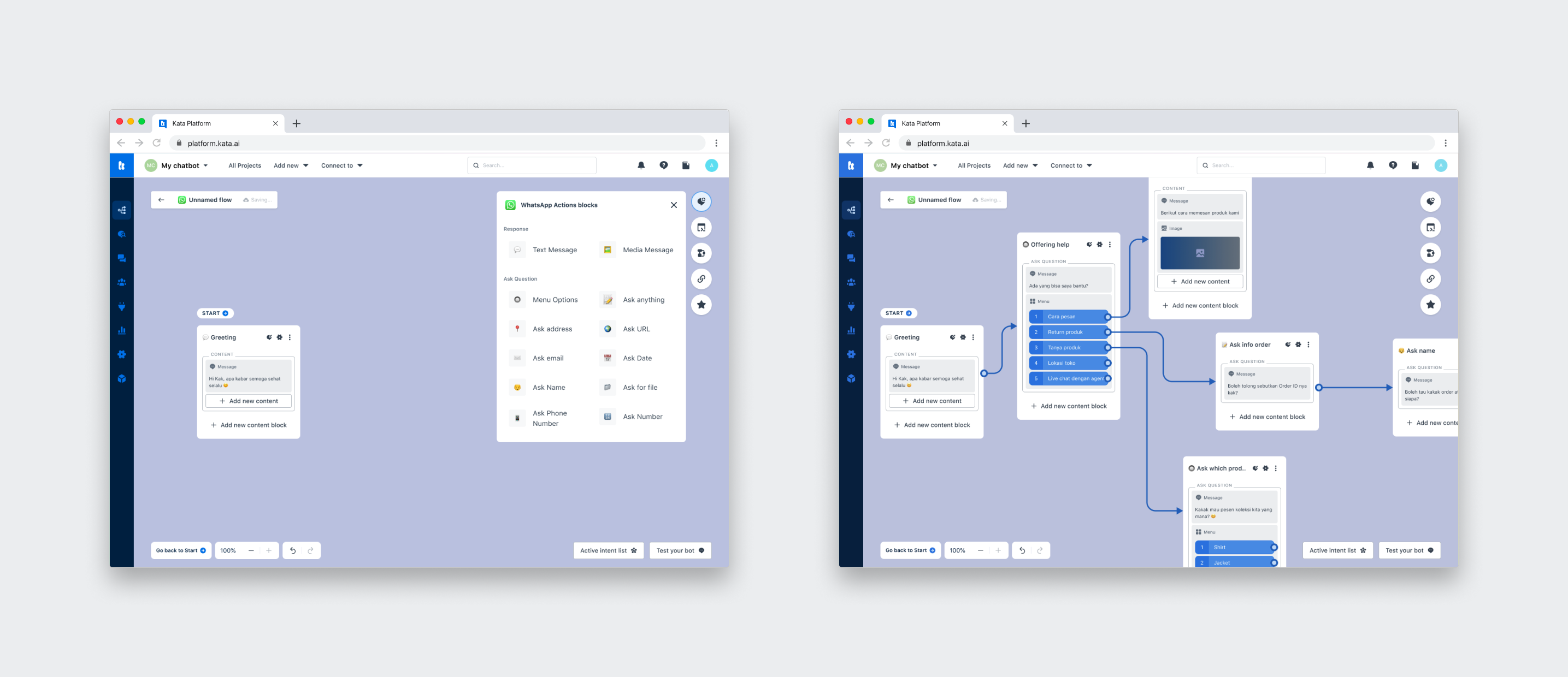
Chatbot Builder
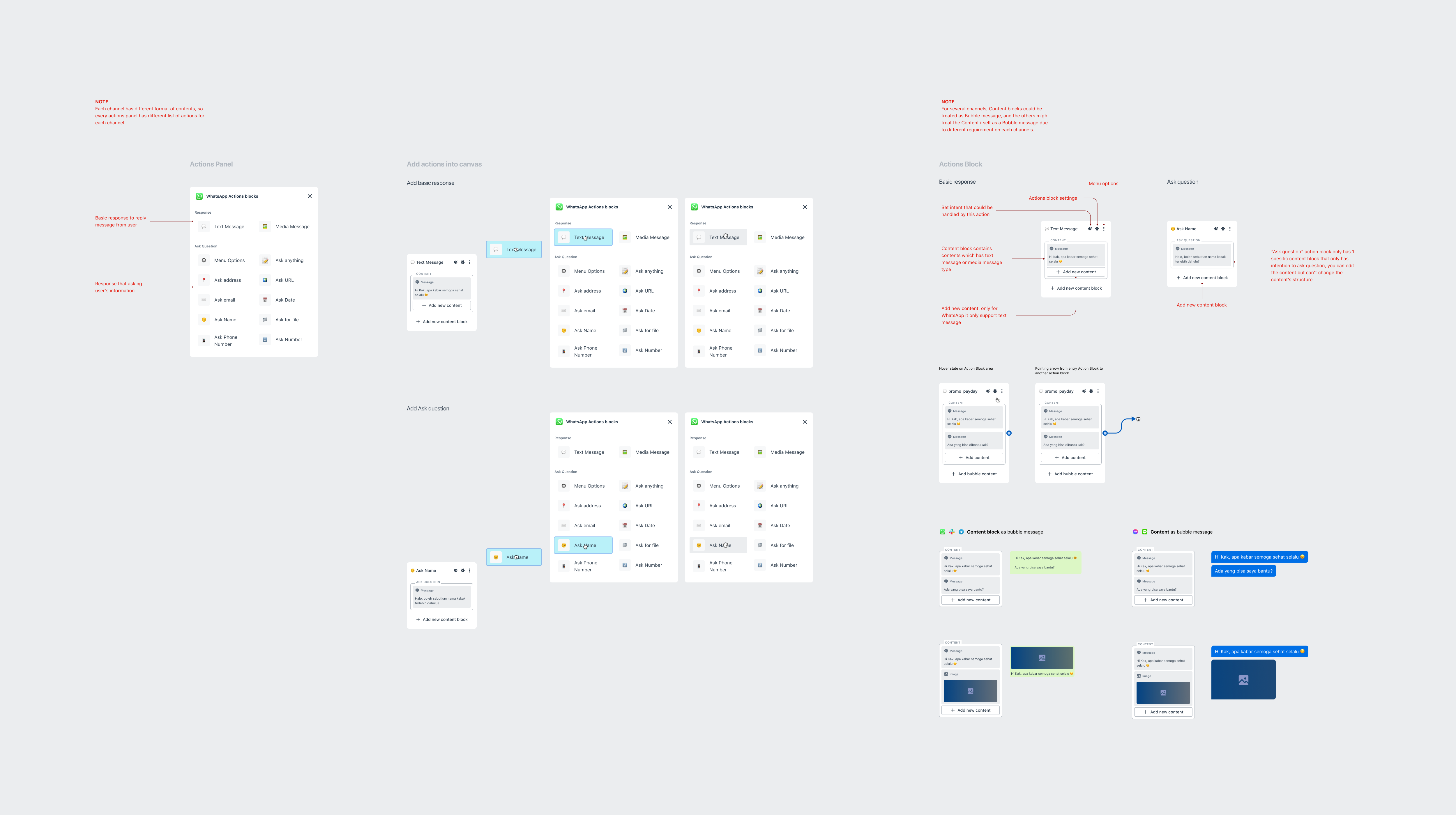
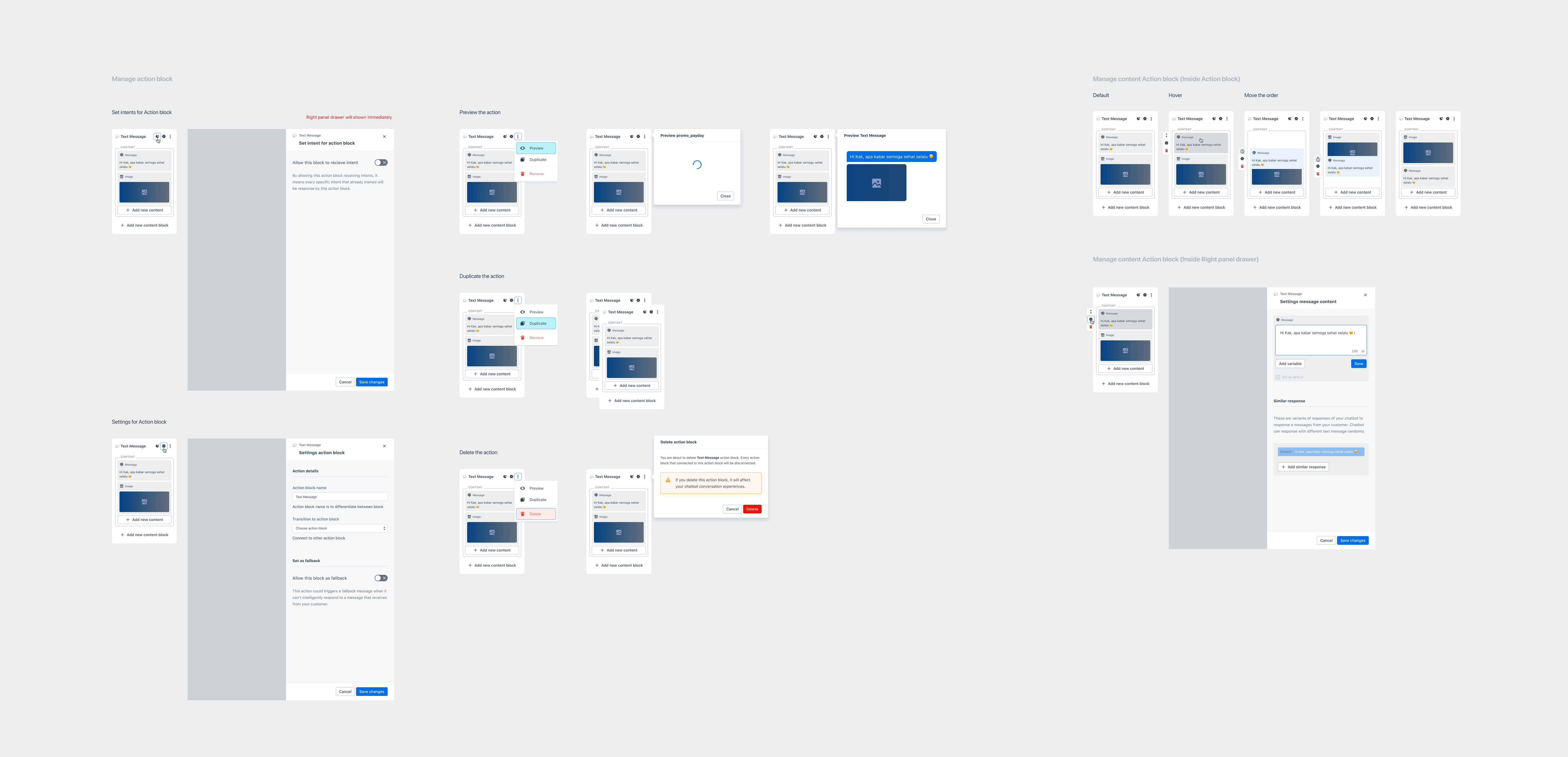
The below two specs UI document routes to editing and customizing the action and the content for each action. Action panels can be accessed via the right floating navigation allowing users to add new actions. When users input the action into flow builder, they can start customizing the content and set up the actions to suit the chatbot for the business purpose.
Train the chatbot
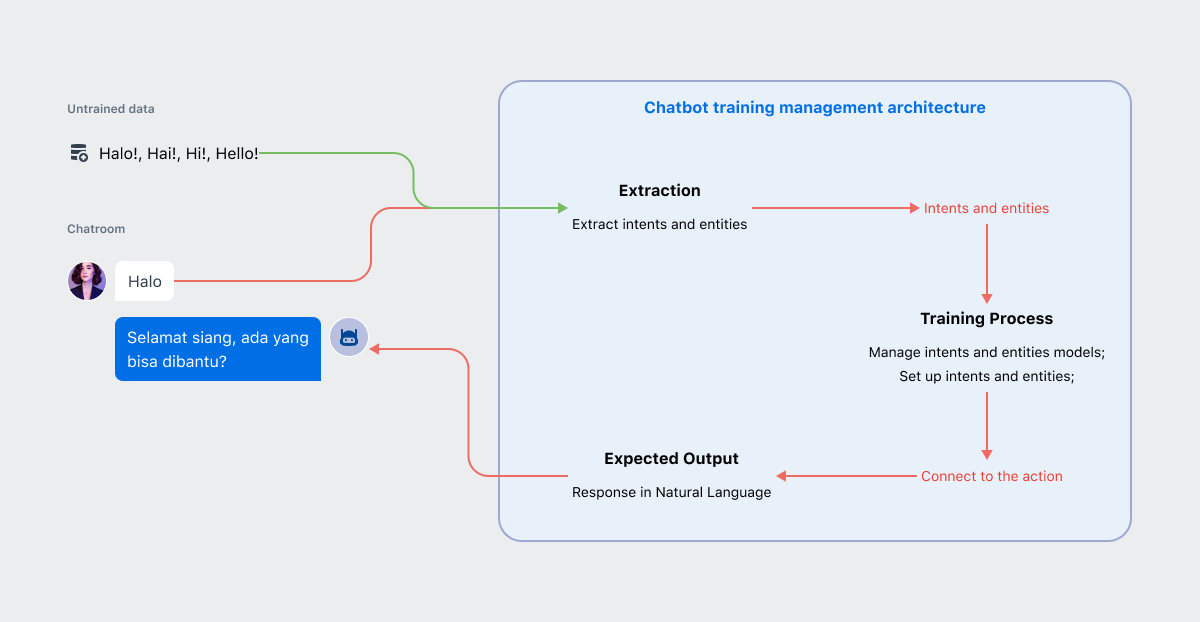
Training the chatbot on Kata Platform supported by the engine that can input the NLU-based into the rule-based chatbot, user can teach the chatbot to handle more various contexts. User can make the chatbot have self-learning capabilities to read and comprehend the context and continuously learn and improve conversation skills on their own.
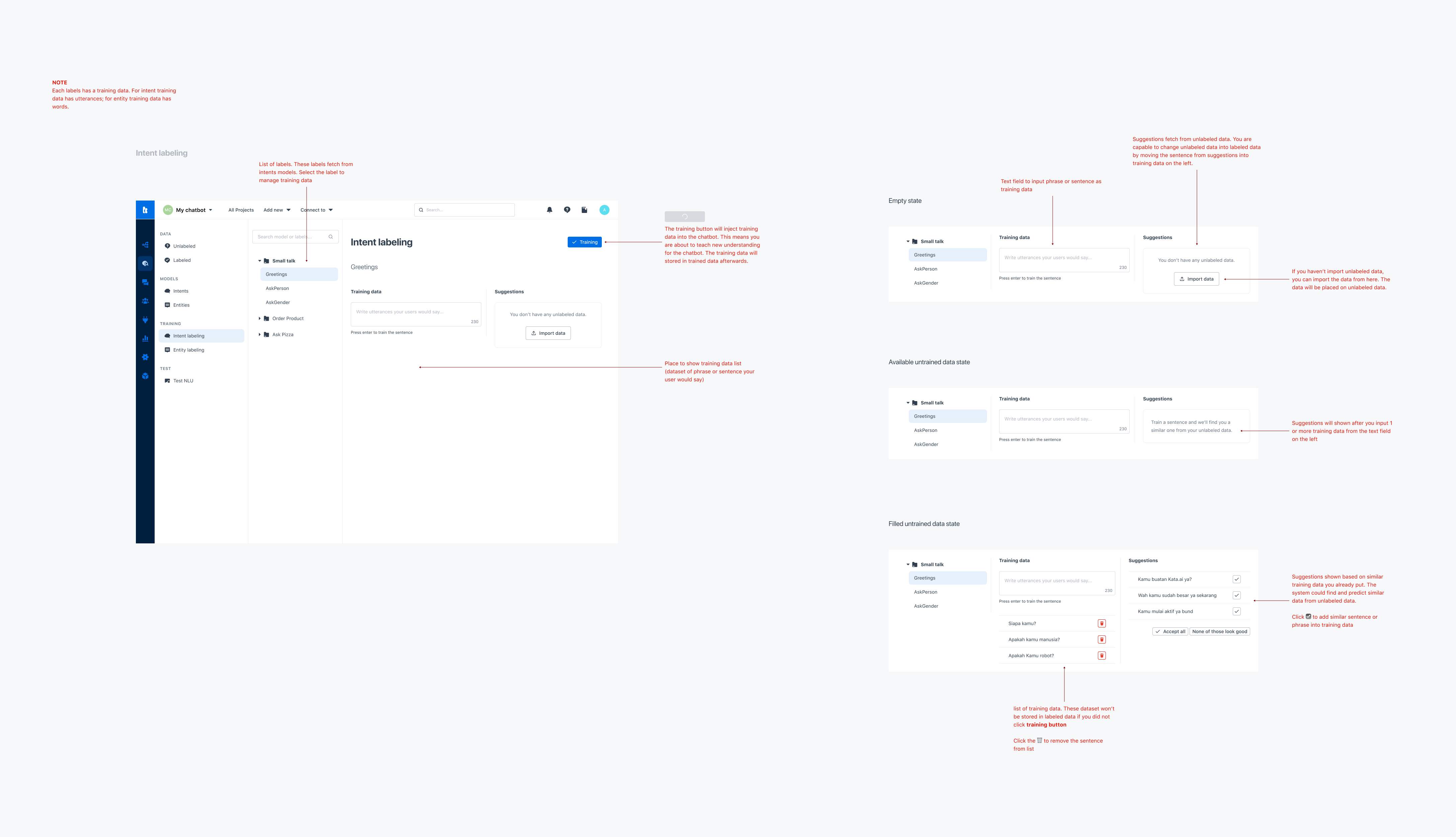
But, chatbots have no ability to improve conversation skill on their own at first. Chatbot needs a human role to define the utterances, phrases, intents, entities, context, or everything in between. The key to success in training the chatbot is to import more relevant data into the NLU engine. Therefore, the UI must be designed well for the chatbot training management system.
Chatbot training management system
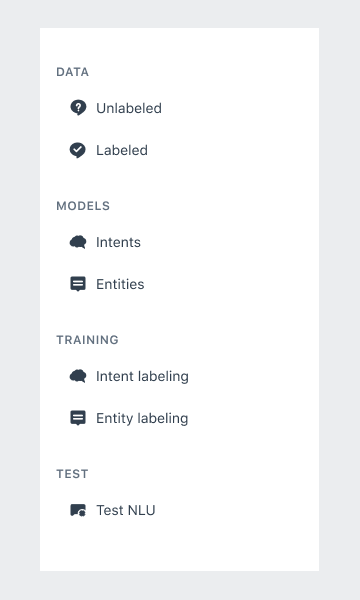
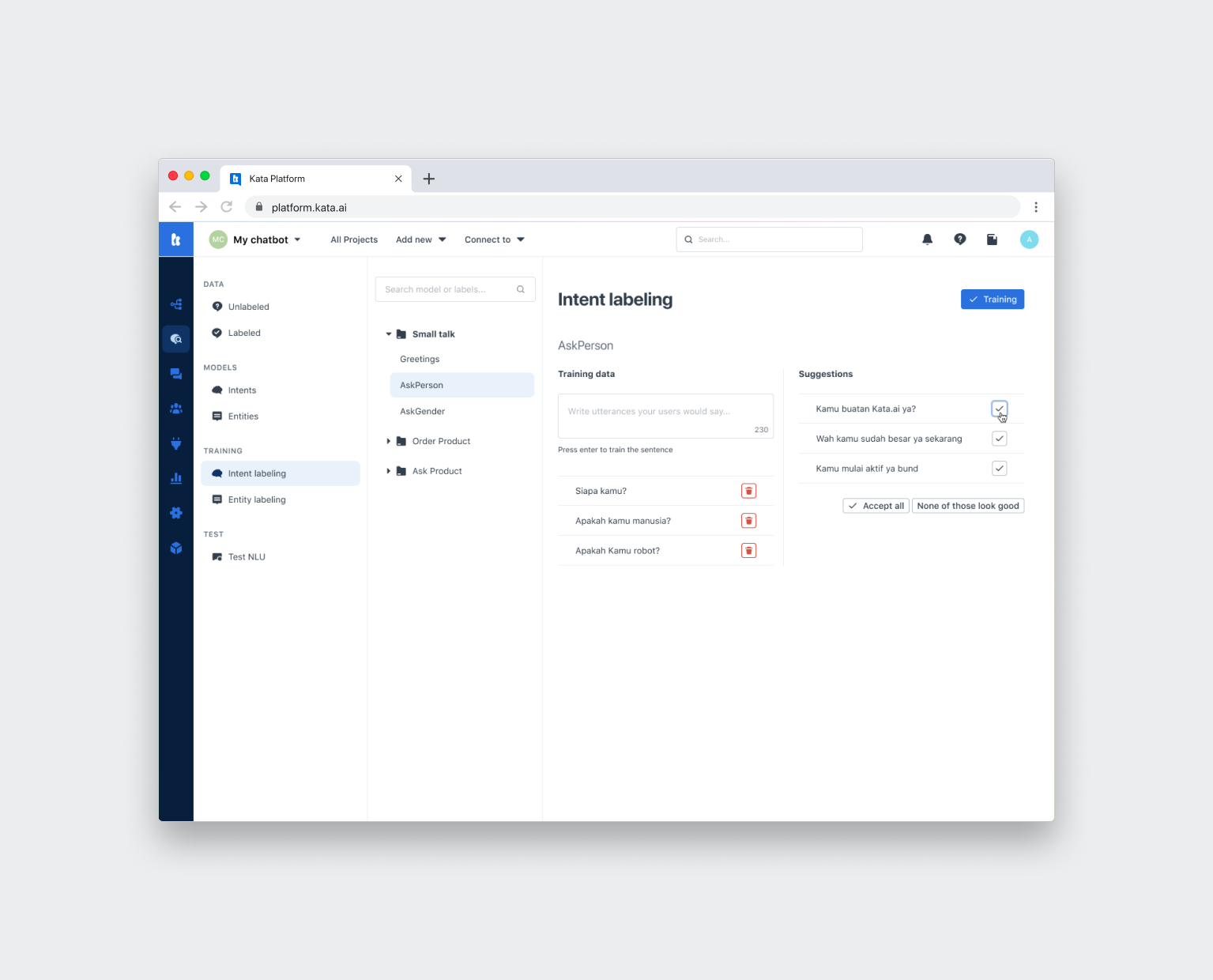
To make user aware of chatbot training management, we put training chatbot on high-level navigation, as top-notch feature that can make the chatbot could handle various context from the customers, we designed the sub-navigation such below
In order to extract the intents and entities, user can obtain the utterances from an imported file on unlabeled data page or conversations on the chatroom from Live Chat.
Page training designed to set up each utterance into the Intent model and each entity into the Entity model. The UI had to cover these tasks to change the untrained data which is unlabeled data into training data, so the chatbot can respond to the customers in natural language on Live Chat.
The Learning
This project has been an amazing learning experience, especially on how to design SaaS model that I’ve never experienced before. The down and the ups all combined to help me grow as a digital product designer. Here’s my key learning when designing a chatbot builder:
- It is important to conduct business analysis If the target audience is too small, designing one or two solutions will not bring enough profit. To avoid that, on the service level we need to try expanding functionalities. The challenge of designing a chatbot builder is how to keep the learnability and user satisfaction of all functionalities under one big application.
- There’s no bad ideas, only bad execution of good ideas There is no point in designing a digital product that will not meet current trends nor customer demand. That’s why everything needs to be discovered and measured. Good design is not only just how it looks, but also how it works and how it impacts the business.
- Sophisticated doesn’t equal complexity Kata Platform has sophisticated technology that no other chatbot builder had, but no one understands how the technology works (except Kata.ai’s engineering team). Information architecture and navigation are the primary ways for users to find what they need from the product. When we define a way how a user will interact with a chatbot builder, the simpler and the more intuitive the design, the higher the chances that users will adopt the product and get used to it.
Special thanks to Rizyan Irawan for providing helpful insights and feedback throughout the project;
Mas Emje, a magician 🎩 behind Illustrations and icons;
Mas Tri for help in design framework and neat documentations. Also, a big shout to
Irawati Ayu Rembulan for helped me in making this case study. 🙌 🙇♂️
Thankyou for reading till the end! If you have any feedback about this project or any other project that you think we can work on together, drop me a message at
hello.adrixdesign@gmail.com or connect me on
LinkedIn.